

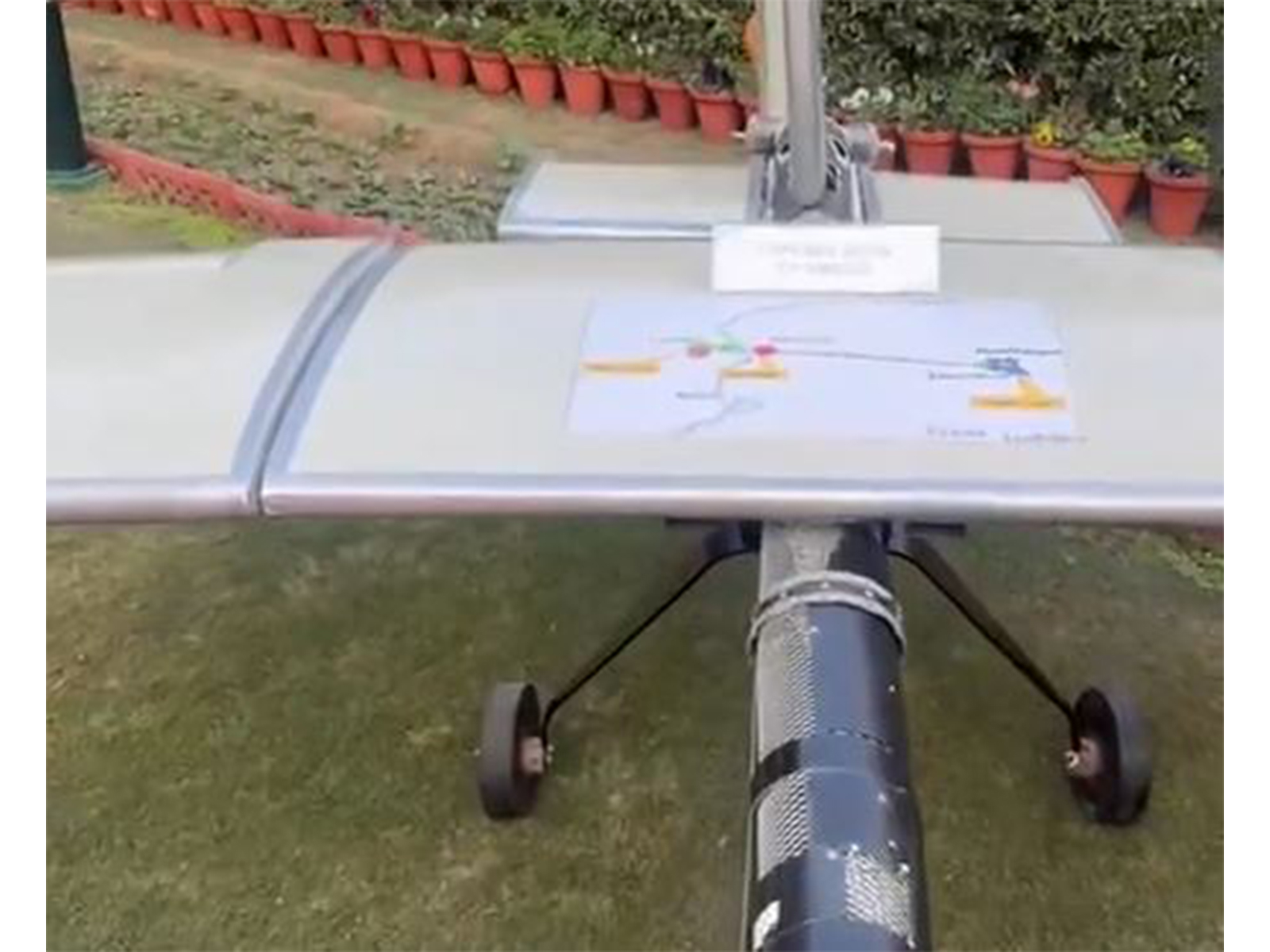
New Delhi [India], December 16 (ANI): The Indian Army showcased a captured Pakistan military drone of Turkish origin brought down by the Indian forces on May 10 during Operation Sindoor.
On May 9, in a major escalation along India’s western front, the Pakistani army carried out multiple airspace violations and drone intrusions on the night of May 7 and 8, targeting Indian military infrastructure.
The Indian Army had revealed that 300 to 400 drones were deployed across 36 locations, with several being shot down by Indian forces using both kinetic and non-kinetic methods. Initial investigations suggest the drones were Turkish-made Asisguard Songar models.
Operation Sindoor, initiated on May 7, 2025, in the aftermath of the Pahalgam terror attack, which claimed the lives of 26 innocent civilians, showcased a calibrated, tri-services response that embodied precision, professionalism, and purpose. The operation was conceived as a punitive and targeted campaign to dismantle the terror infrastructure across the Line of Control and deeper inside Pakistan.
India successfully destroyed nine major terror launchpads in Pakistan and Pakistan-occupied Jammu and Kashmir (PoJK), targeting Lashkar-e-Taiba, Jaish-e-Mohammed, and Hizbul Mujahideen facilities. Over 100 terrorists were killed in action.
The operation unfolded across land, air, and sea–a seamless demonstration of synergy between the Indian Army, Air Force, and Navy. The Indian Air Force (IAF) played a crucial role in delivering precision strikes against terror infrastructure across Pakistan. It conducted high-impact air operations on targets such as the Nur Khan Air Base and the Rahimyar Khan Air Base, with visual evidence of damage presented during official briefings, according to the official release.
The Air Force’s robust air defence environment proved pivotal in protecting Indian airspace during retaliatory drone and UAV attacks from across the border. The indigenously developed Akash surface-to-air missile system and legacy platforms like the Pechora and OSA-AK were deployed effectively in a layered defence grid. The IAF’s Integrated Air Command and Control System enabled real-time coordination of air assets, allowing Indian forces to neutralise aerial threats efficiently and maintain net-centric operations throughout the conflict, according to the release.
According to the release, the Indian Army also demonstrated its preparedness and effectiveness in both defensive and offensive roles. The Army’s air defence units worked in tandem with the Air Force, deploying a wide array of systems ranging from shoulder-fired MANPADS and LLAD guns to long-range SAMs. These units were instrumental in countering waves of drones and loitering munitions launched by Pakistan.
At least 26 people were killed in the Pahalgam terror attack on April 22, following which India launched Operation Sindoor. India conducted precision strikes on terror infrastructure in Pakistan and Pakistan-Occupied Jammu and Kashmir (PoJK), and also repelled Pakistani aggression and pounded its airbases. (ANI)
Disclaimer: This story is auto-generated from a syndicated feed of ANI; only the image & headline may have been reworked by News Services Division of World News Network Inc Ltd and Palghar News and Pune News and World News

HINDI, MARATHI, GUJARATI, TAMIL, TELUGU, BENGALI, KANNADA, ORIYA, PUNJABI, URDU, MALAYALAM
For more details and packages